Global
 Region

 Contact
 Principles & vision


 Procurement

Global
Region
Principles & vision
Procurement
The Yaskawa Group recognizes that water is a limited resource and strives to protect water resources.
Water usage is monitored monthly to make sure that water leakage and other problems are detected early.
We promote the installation of real-time remote monitoring equipment when constructing new buildings.
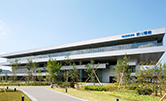
Additionally, at our headquarters rainwater accounts for 97% of the total water amount used.
No violations or penalties occurred with regard to laws and regulations concerning water usage during FY2025.
| Metric | Scope | Target |
|---|---|---|
| Reduction rate in water withdrawal per unit of sales (vs. FY2025) | Yaskawa Group | 10% |
| Mid-term environmental plan targets for FY2025 | Initiatives and results for FY2025 | Self evaluation |
|---|---|---|
| Reduction of water usage (Yaskawa Electric) 1% reduction (169,000 m3) compared to FY2022 |
Reduction of water usage (Yaskawa Electric) 167,000 m3 |
〇 |
Self-evaluated achievement ratios to targets: ◎ – 130% or more, 〇 – 100% or more, △ – 50% or more, × – under 50%
Our production processes do not rely heavily on water, and most of our water withdrawal is for human consumption and sanitary purposes.
We are working to reduce water withdrawal by taking measures against water leakage and switching to water-saving equipment.
In particular, we are actively promoting the use of water-saving toilets and other measures to reduce water consumption when constructing new buildings.
We evaluate water risks at the Yaskawa Group’s production plants in Japan and overseas using Aqueduct*1. Evaluations indicated that six plants in China and one plant in India are located in high water stress areas. In FY2025, water withdrawal at sites located in areas with high water stress totaled 38,600 m3, accounting for approximately 14% of the entire Yaskawa Group.
Water storage tanks are installed at sites with risk of drought, and sandbags and water barriers are placed at sites with risk of flooding.
*1: Water risks refer to the dangers and threats to corporate activities that may result from water pollution and water stress due to water shortages.


Copyright © 2003‐2026 YASKAWA ELECTRIC CORPORATION.