Global
 Region

 Contact



 Principles & vision


 Procurement

Global
Region
Principles & vision
Procurement
Yaskawa recognizes climate change as a key management issue and is promoting the identification and disclosure of climate-related risks and opportunities. In addition, we are working to reduce greenhouse gas emissions not only at our own sites but throughout the supply chain. We regard energy conservation as a fundamental measure for decarbonization and continuously invest in energy-saving initiatives, including improving the efficiency of production equipment, reducing electricity consumption through the use of AC drives, and advancing energy management.
We are also promoting the decarbonization of energy used throughout the Yaskawa Group while working closely with suppliers to drive decarbonization across the entire value chain. Furthermore, by utilizing Internal Carbon Pricing (ICP), we incorporate climate-related risks and future carbon costs into investment decisions. Through this approach, we are accelerating energy-saving investments and the introduction of renewable energy as we steadily work toward achieving carbon neutrality by 2050.
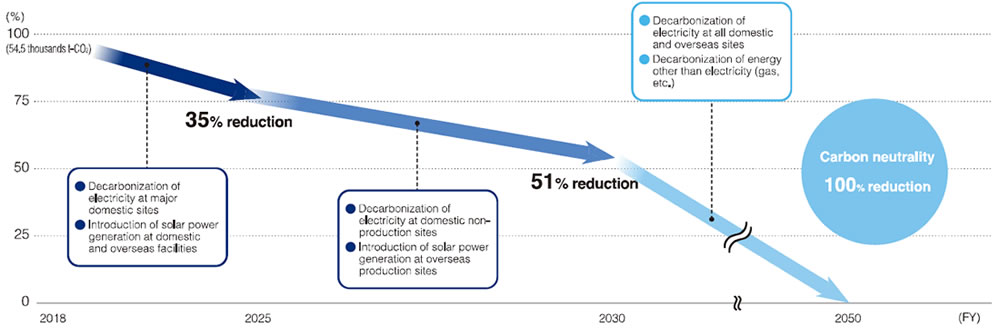
The Yaskawa Group aims to reduce net CO2* emissions (scope 1* + scope 2*) to zero, achieving carbon neutral in our business activities by 2050. To achieve this goal, we will reduce CO2 emissions in 2030 by 51% from 2018 levels (Emissions: 54,476 t-CO2).
By 2030, we will also reduce CO2 emissions in the upstream and downstream of the supply chain (scope 3*) by 15% from 2020 levels (Emissions: 50,439,000 t-CO2).
This 2030 target was recognized as a “1.5℃ target” by SBTi, an international initiative which verifies that corporate CO2 reduction targets are in line with scientific evidence.
*CO2:Includes carbon dioxide and other greenhouse gases, such as fluorocarbons.
*Scope 1:Emissions primarily from using fuels (direct emissions)
*Scope 2:Emissions from using purchased electricity and heat (indirect emissions by power companies and other entities)
*Scope 3:Indirect emissions other than scope 1 and scope 2 (emissions by other companies related to the activities of the business)
Under our Environmental mid-term plan 2025, we set a goal to reduce the Group’s total CO2 emissions by 30% compared to FY2018, and we have actively implemented energy-saving initiatives to achieve this target.
In FY2025, we began operating a solar power generation system at Robot Factory No. 5 of the Yahata-nishi Plant, switched to CO2-free electricity at the Yukuhashi Plant, Tsukuba Research Laboratory, and Kansai Office, and promoted the use of high-efficiency central air-conditioning systems and site-specific energy-saving initiatives. As a result of these efforts, the Group reduced total CO2 emissions by 35% in FY2025. This significantly exceeded our target of a 30% reduction, thus achieving our goal.
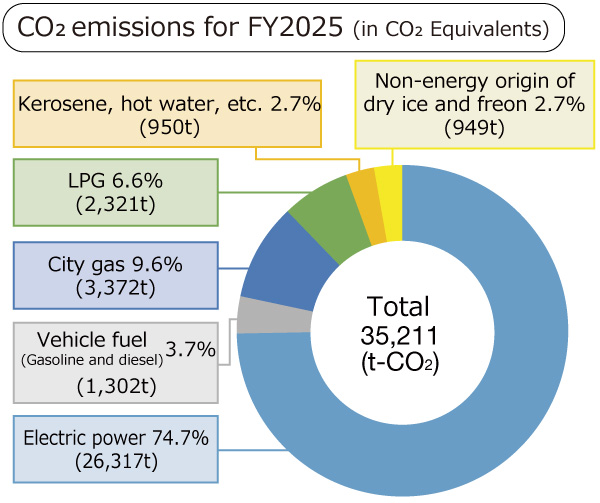
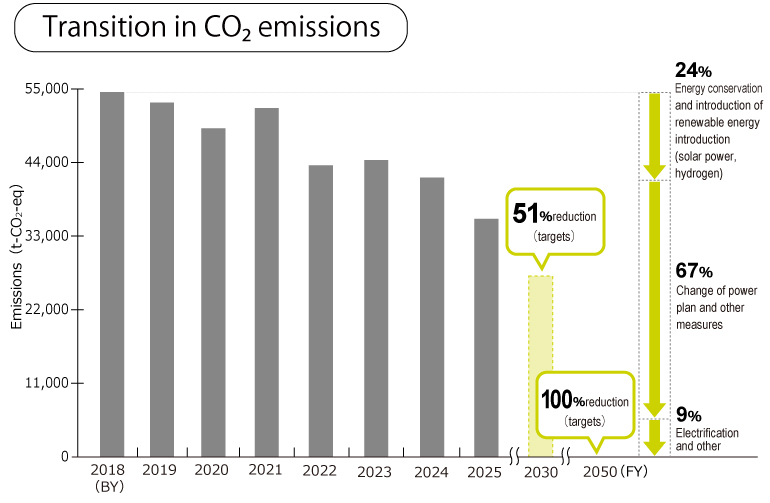
※In calculating CO2 emissions from domestic electricity, actual emission factors published by electric power companies were used up to FY2018, and adjusted emission factors have been applied from FY2019 onward.
※For overseas electricity CO2 emissions, national representative emission factors (based on IEA data) are used.
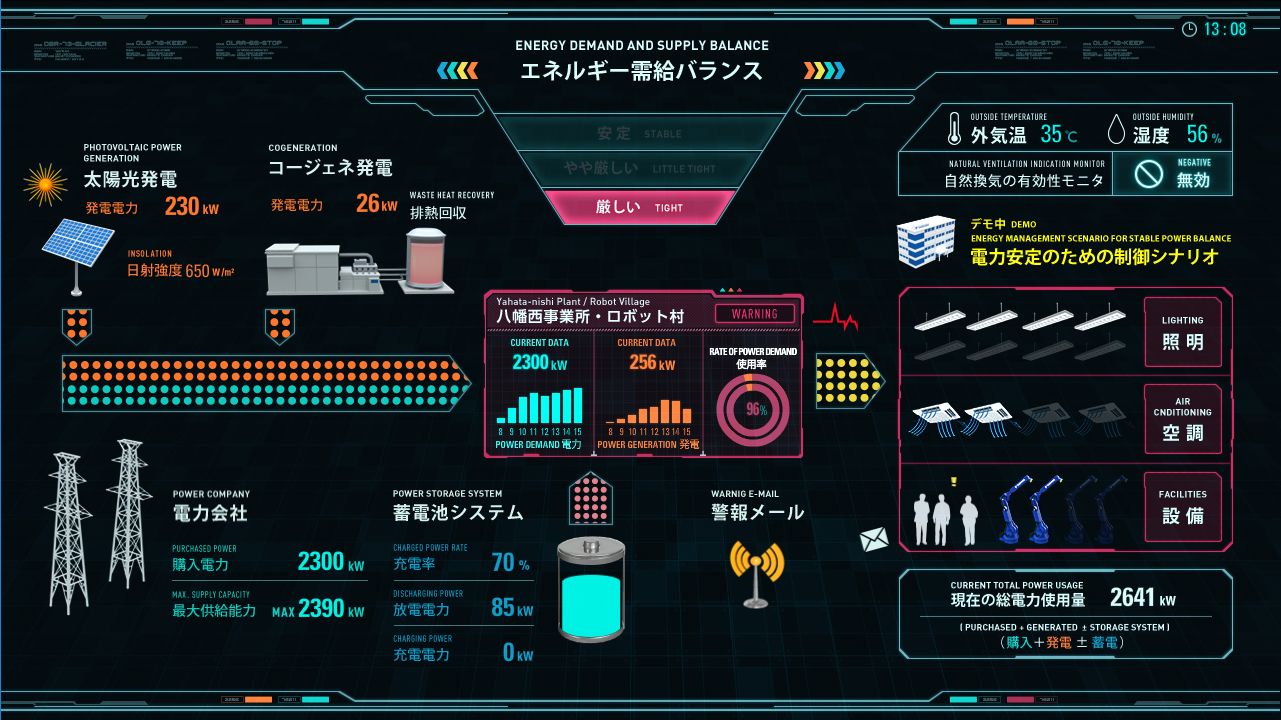
Air conditioning control through energy management system
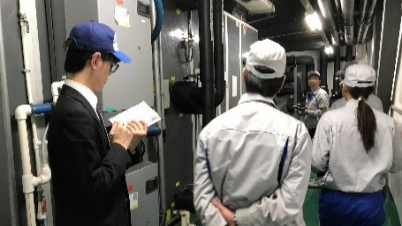
Energy-saving diagnostics at our factory in China
Under our FY2025 Mid-term Environmental Plan, we promoted various initiatives with the goal of reducing the Group’s total CO2 emissions by 30% compared to FY2018 levels. In the area of electricity, we worked toward achieving a CO2-free electricity rate of 75% or more for Yaskawa Electric’s total electricity consumption.
In February 2025, we completed the adoption of CO2-free electricity at Yukuhashi Plant, in addition to Yahata-nishi Plant, Nakama Plant, Kokura Plant, and Iruma Plant. As a result, we achieved 100% CO2-free electricity at all Yaskawa-owned buildings in Japan, and the CO2-free electricity rate for Yaskawa Electric reached approximately 85%, exceeding our target. Building on this achievement, our FY2029 Mid-term Environmental Plan target expands the scope to the entire Yaskawa Group and sets a goal of achieving a CO2-free electricity rate of 55% or more for total electricity consumption.
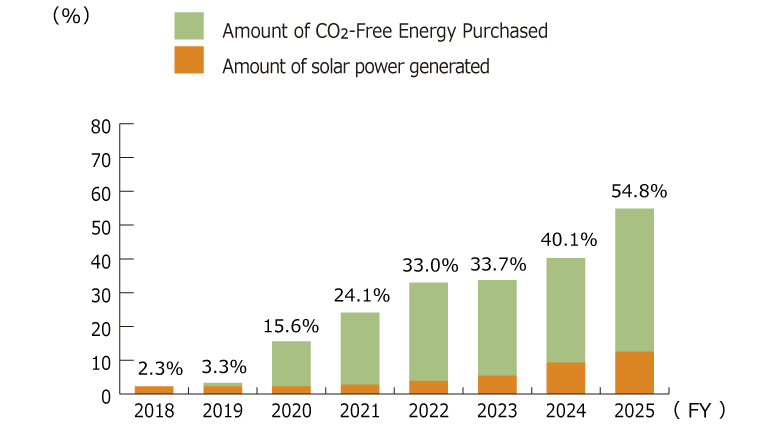
CO2-free energy rate in electricity consumption (YEC)

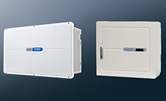
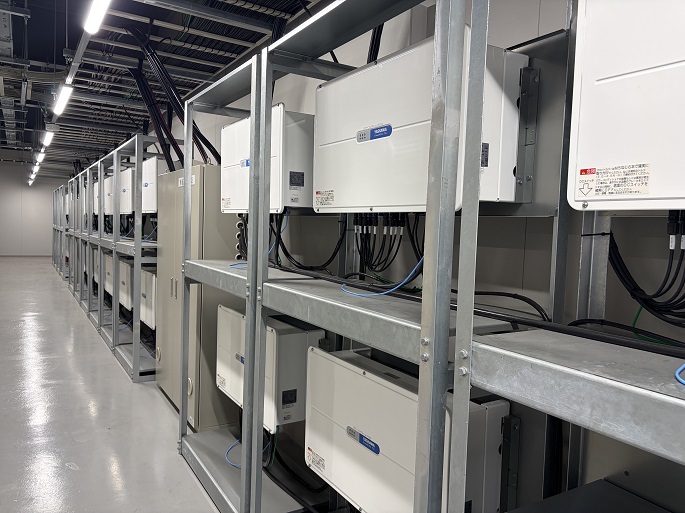
Our products power conditioner

Our products power conditioner
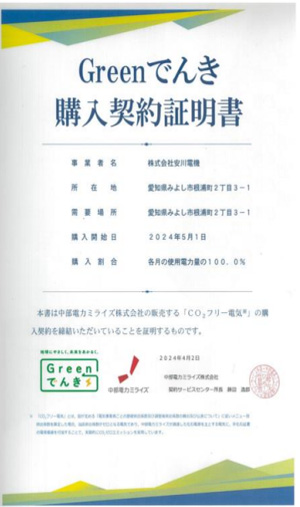
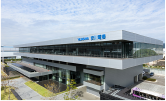
Certificate of CO2-Free Electricity – Chubu Robotics Center
Since May 2024, the Chubu Robotics Center has started a contract for Chubu Electric Power’s CO2-Free Menu, utilizing non-fossil certificates to ensure purchased electricity is completely CO2-free.
Because the site’s entire energy composition is 100% electricity, the Chubu Robotics Center has become Yaskawa Electric’s first location to achieve zero CO₂ emissions.
A certificate verifying the use of CO2-free electricity is also displayed at the entrance of the Chubu Robotics Center.
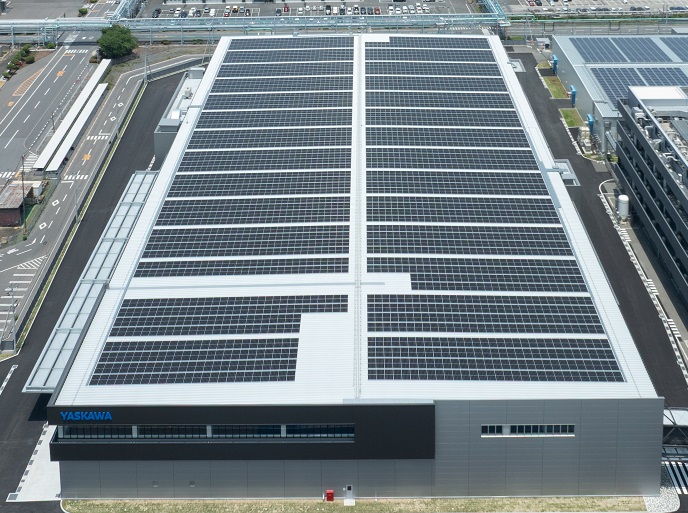
Following Robot Factory No. 4, a solar power generation system is now in operation at Robot Factory No. 5, our state-of-the-art production facility that began operations in July 2026. With a capacity of 1.5 MW, it is the largest solar power installation at Yaskawa Electric.
The system is equipped with Yaskawa’s Enewell-SOL P3A photovoltaic solar inverter, contributing to the effective utilization of renewable energy and the reduction of environmental impact.
In line with “YASKAWA ECO VISION”, we are strengthening our initiatives toward achieving a decarbonized society. As part of these efforts, we conduct energy-saving assessments for our suppliers and provide concrete improvement proposals.
・Optimization of air-conditioning operating patterns, energy savings through equipment upgrades, improvements to air leakage, proper operation of exhaust fans, installation of sunshade nets on outdoor units, and support for the introduction of solar power generation systems.
Through these proposals, we aim to help our suppliers reduce energy consumption, lower CO2 emissions, and optimize electricity costs. We consider reducing environmental impact across the entire supply chain an important mission and will continue to provide ongoing support in these efforts.
YASKAWA EUROPE GmbH ROBOTICS DIVISION in Germany obtained ISO 50001 certification in December 2016. We have improved energy performance by implementing energy-saving measures.
YASKAWA EUROPE GmbH ROBOTICS DIVISION uses an energy management system that delivers data on energy use and efficiency in a visual format. We save energy by reviewing work procedures and eliminating redundant processes.
In FY2024, we constructed an additional building that uses district heating (waste heat from a biomass plant) in the same way as the existing buildings.
Since June 2024, we have obtained a certificate from the district heating supplier certifying a CO2 emission factor of
0 gCO2/kWh.
The added building is also equipped with a DALI (Digital Addressable Lighting Interface) control system that enables high energy efficiency through dimming in accordance with room usage and requirements.
We are also undertaking “Energy and Environment Campaign” to raise employees’ awareness on environmental conservation and energy savings. We created a sticker featuring the catchphrase “Green YASKAWA Footprint” for the campaign.
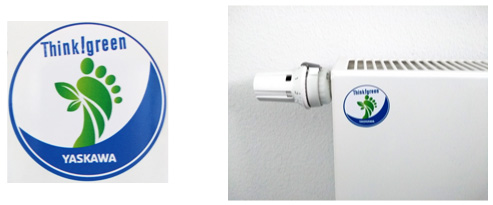
Our first target was to reduce the inflow of outdoor air into heated rooms. We attached stickers near thermostats for radiator heaters to raise awareness of temperature settings.
The next target we set was to reduce paper use in printing and energy use in lighting, attaching the stickers to printers and light switches.
By FY2024, we replaced fluorescent lamps in our offices with LEDs. This not only improved brightness and comfort in the workplace, but also reduced power consumption by more than 50% even when illumination levels were increased.
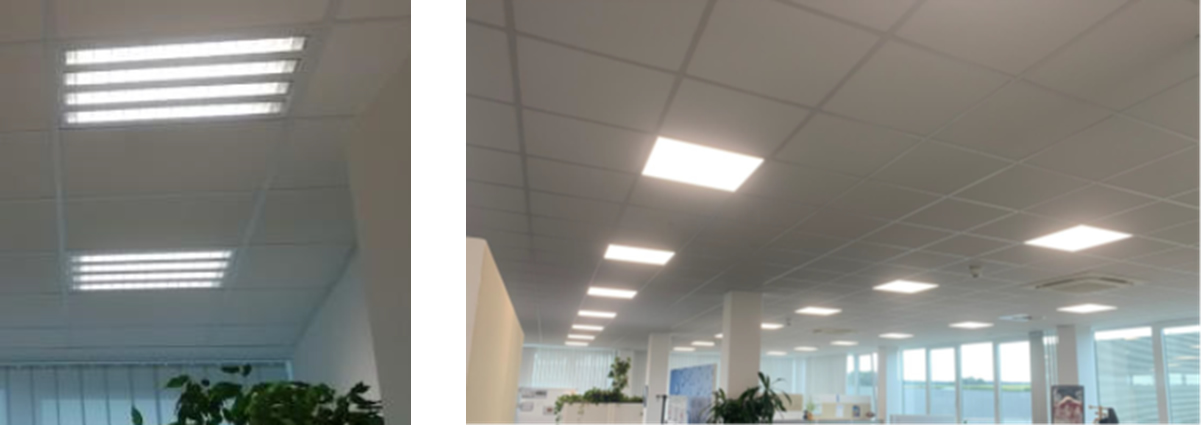
To optimize energy consumption for air conditioning, we improved the operating program of the central control system to prevent unnecessary operation and introduced a system that enables individual area adjustments via remote control. This enables air conditioning management that combines energy conservation with comfort.
These initiatives have been effective in raising employees’ awareness on energy conservation. Since FY2020, we have installed monitors that show the real-time status of energy consumption collected through our energy management system. We are also continuously expanding the collection of real-time data from other areas.
By raising employees’ awareness on energy conservation, we aim to further reduce our environmental impact.
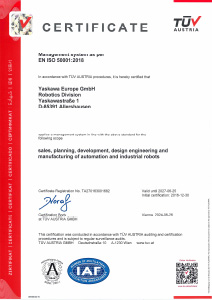
ISO50001 is the international standard for energy management and is designed to help organizations in all fields and sizes to manage energy use and improve energy performance continuously.
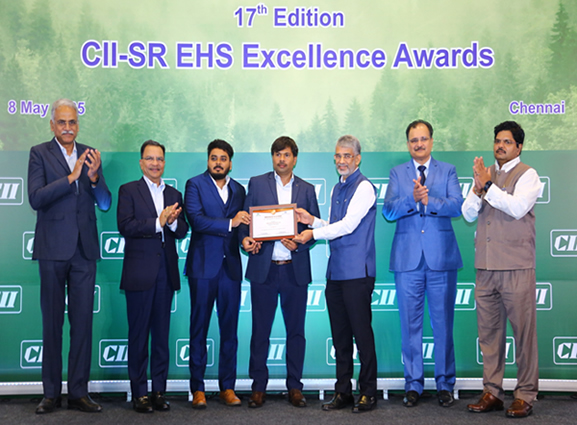
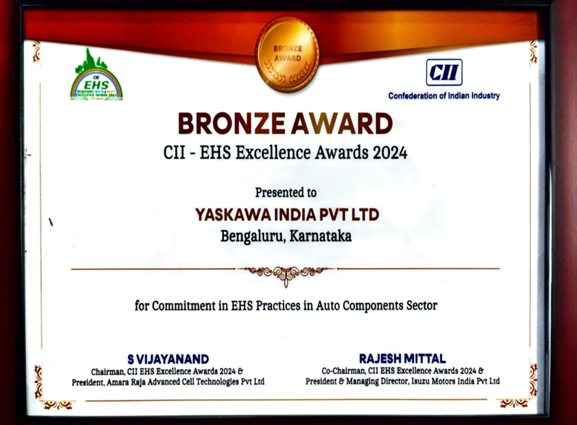
In May 2025, Yaskawa India received the Best EHS Practices Award at the National EHS (Environment, Health & Safety) Excellence Awards 2025, hosted by the Confederation of Indian Industry (CII).
This award recognizes Yaskawa India’s world-class EHS practices and outstanding efforts in sustainability, health, and workplace safety.
Among over 450 participating companies, Yaskawa India earned high marks through the following evaluation process.
– A two day on-site review by CII expert auditors
– A scoring system based on innovation, legal compliance, and social impact
Additionally, a comprehensive employee wellness program has been introduced, covering ergonomics and mental health.
This award is a testament to the dedication of every Yaskawa India employee and reflects our unwavering commitment to “Safety First”.
We will continue to fulfill our responsibilities to people, the planet, and productivity.
On March 30, 2022, our Yahata-nishi Plant and Kokura Plant, which are located in Kitakyushu, were certified under the “Kitakyushu Certification System for Decarbonized Energy” as a Leading Company in Decarbonization for their early adoption of CO2-free energy.
Aiming to become a zero carbon city by 2050, Kitakyushu promotes the use of renewable energy through its Kitakyushu Model for 100% Renewable Energy that aims to have all public facilities make the switch to 100% renewable energy by 2025. The main purpose of this certification system is to accelerate the decarbonization trend by urging companies in the city to join in as well.
Certified companies receive perks such as a “certification sticker and logo.”
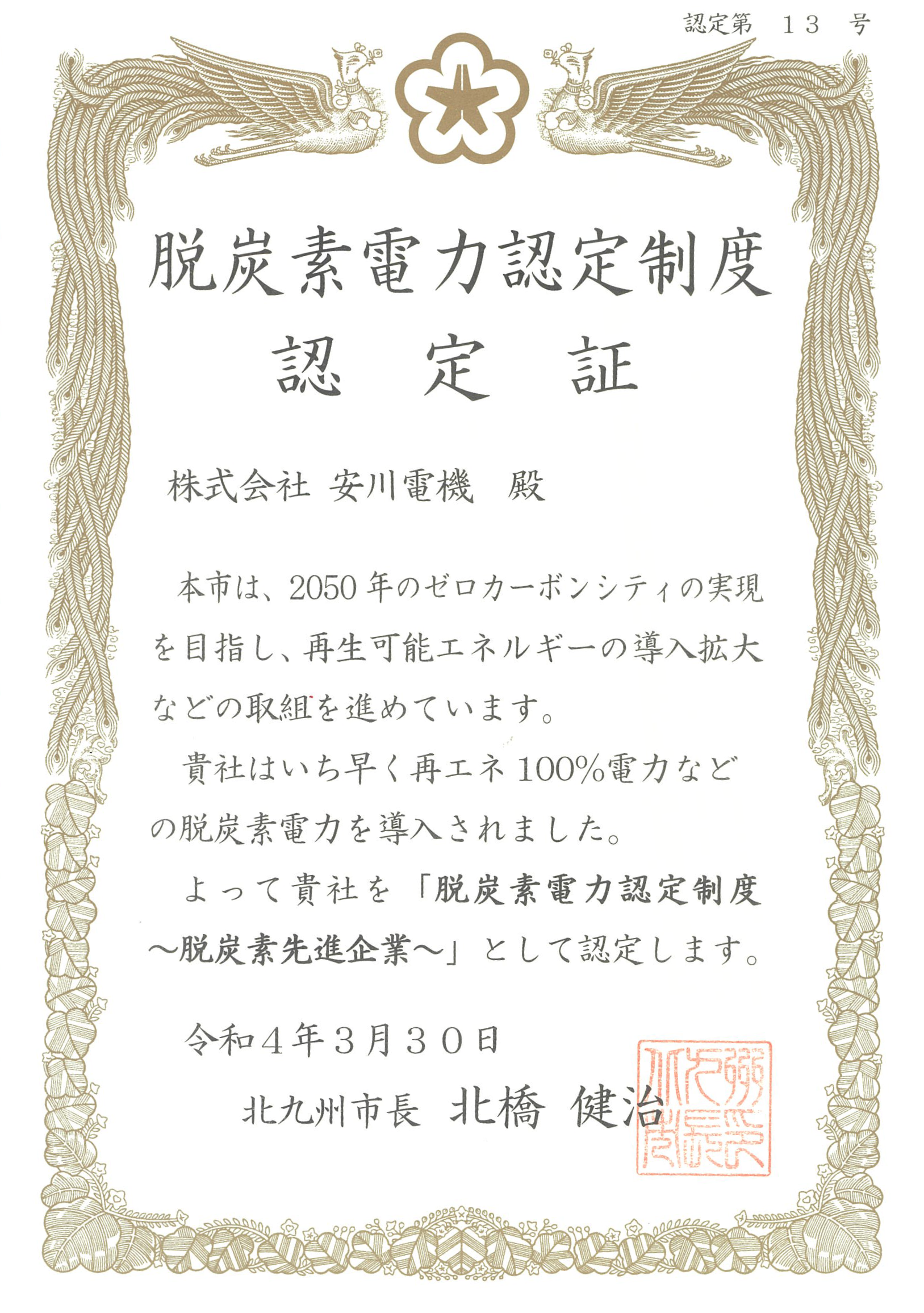
Certificate
Certification Logo
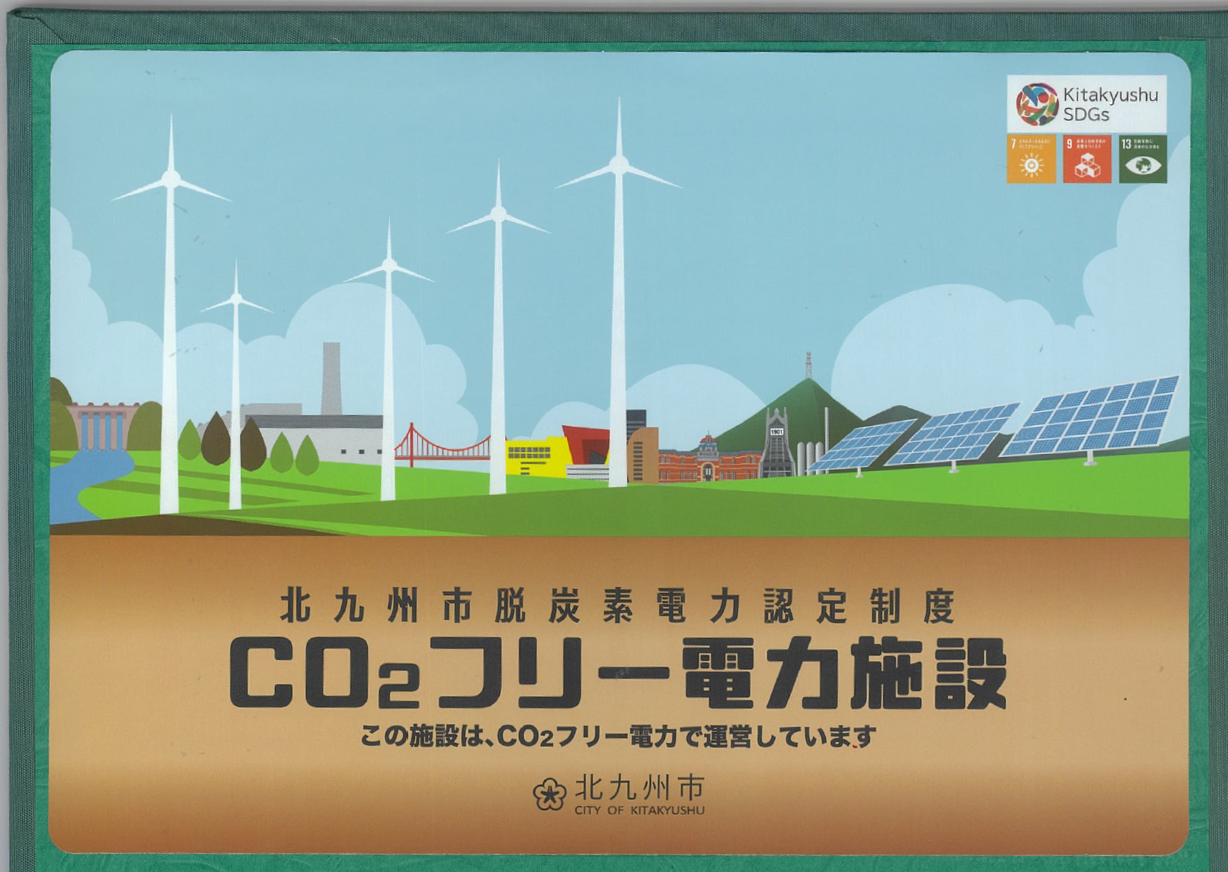
Certification Sticker

The Yaskawa Group announced its endorsement of the TCFD recommendations in September 2019, and in September 2020, the Group implemented various initiatives, including participation in the Ministry of the Environment’s project to support scenario analysis of climate risks and opportunities in line with the TCFD. In May 2021, the Group disclosed climate change-related information based on the TCFD recommendations. In July 2026, in line with our long-term business plan, Vision 2035, we updated our scenario analysis. We reviewed our analysis for FY2035 based on both the 1.5°C and 4°C scenarios and conducted a new scenario analysis for FY2050. We will continue to strive for full disclosure of information related to climate change and continue our environmentally friendly business initiatives in order to contribute to the realization of a sustainable society and further enhance our corporate value.
Based on our Sustainability Policy*1, Yaskawa identifies sustainability issues and targets (materiality) that are important for sustainable growth. The Board of Directors and the Management Committee discuss these material issues and targets and determine measures to address them. We have also established the Sustainability Committee, which is chaired by the President and attended by heads of relevant divisions and Outside Directors serving as advisors, as our sustainability promotion system*2 to monitor and accelerate the implementation of sustainability initiatives across the Group.
We have identified climate change as an important material issue and monitor it through the Sustainability Committee. For the overall execution of these and other measures, we conduct PDCA (Plan-Do-Check-Act) management within the organization for environmental promotion*3, which is led by the Corporate Environmental Officer appointed by the President.
In addition, to promote sustainable corporate activities and address social issues, the compensation of Directors (excluding Outside Directors and Directors who are Audit and Supervisory Committee Members) includes an assessment based on the achievement of the Yaskawa Group’s CO2 emissions reduction targets (Scope 1*4 + Scope 2*5) for its global business activities.
We have assessed the risks and opportunities associated with climate change in motion control, robotics, and system engineering, which are the primary businesses of the Yaskawa Group. These risks and opportunities can be categorized as transition risks and opportunities arising from climate-related measures, such as policies and regulations, and physical risks caused by changes such as natural disasters and rising temperatures. We identified these risks and opportunities and evaluated their impact on our business activities as severe, serious, moderate, or minor. Below, the derived risks and opportunities with a severe, serious, or moderate impact were analyzed with 1.5°C and 4°C scenarios for society in FY2030 and FY2050. As a result, the 4°C scenario assumes that decarbonization efforts do not progress and extreme weather events intensify, so the response to physical risks caused by this are considered the most important challenges.Under the 1.5°C scenario, it is important to address not only physical risks arising from the increasing severity of extreme weather events, but also transition risks, including higher material and resource costs associated with decarbonization.
On the other hand, we understand that there are opportunities arising from the transition to a decarbonized society, such as growing demand for factory automation equipment, industrial AC drives, and renewable power generation equipment, as well as a solutions business that increases productivity and energy saving performance in the factories and equipment of companies by using these devices.
Based on the results of these analyses, the positive impact of opportunities on operating profit is expected to outweigh the negative impact of risks on operating profit under certain assumptions.
In response to these opportunities, the Yaskawa Group will strengthen the competitiveness of its core business areas based on its long-term management plan, Vision 2035. Centered on i3-Mechatronics, the Group’s solution concept, we will further enhance the value of automation solutions while promoting the social implementation of Physical AI through the utilization of AI and data.
In addition, by expanding new applications for mechatronics and cultivating the Physical AI market, we will broaden the provision of products and services that contribute to the realization of a decarbonized society.
Furthermore, while accelerating a deeper understanding of the Yaskawa Group Management Principles, we will further evolve our i3-Mechatronics solution concept through AI and expand a new world, i3-Singularity, which realizes data-driven management optimization, manufacturing innovation, and implementation in workplaces and society. Through these efforts, we aim to contribute to the sustainable development of society and enhance corporate value.
| Risks/ Opportunities |
Transition/ Physical |
Driver | Impact | Time Horizon |
Financial Impact | |||
|---|---|---|---|---|---|---|---|---|
| FY2035 | FY2050 | |||||||
| 1.5℃ | 4℃ | 1.5℃ | 4℃ | |||||
| Risks | Transition | Carbon Pricing |
|
Medium to Long Term | Moderate | Minor | Minor | Minor |
| Government Policies on Carbon Emissions |
|
Medium to Long Term | Moderate | Minor | Moderate | Minor | ||
| Energy Efficiency and Decarbonization |
|
Medium to Long Term | Serious | Minor | Severe | Minor | ||
| Recycling Regulations |
|
Medium to Long Term | Minor | Minor | Minor | Minor | ||
| Adoption of Low-carbon Technologies |
|
Medium to Long Term | Serious | Minor | Serious | Minor | ||
| Changes in Investor and Customer Behavior |
|
Medium to Long Term | Minor | Minor | Minor | Minor | ||
| Physical | Rising Average Temperatures |
|
Medium to Long Term | Minor | Moderate | Minor | Moderate | |
| Increasing Severity of Extreme Weather Events |
|
Short Term | Severe | Severe | Severe | Severe | ||
| Opportunities | Transition | Energy Efficiency and Decarbonization |
|
Short to Long Term | Severe | Minor | Severe | Minor |
| Changes in Investor and Customer Behavior |
|
Short to Long Term | Minor | Minor | Minor | Minor | ||
The principal measures taken to address the climate-related risks and opportunities identified through scenario analysis are as follows.
The Yaskawa Group has established a Risk Management Committee under the Board of Directors to ensure the prompt and appropriate response to risks that could directly or indirectly affect the Group’s management or business operations. Chaired by the executive officer responsible for risk management and crisis management. The Committee is responsible for developing, promoting, and overseeing the Group-wide risk management framework and related mechanisms.
Climate-related risks are also assessed and managed by the Committee. In the event of a crisis, a task force appropriate to the severity of the situation is established to implement the necessary response measures.
Information discussed by the Risk Management Committee is shared with the Board of Directors, the Management Committee, and the Sustainability Committee. These bodies oversee and monitor risk management across the Group while ensuring consistency between risk assessments and materiality analyses, thereby strengthening enterprise-wide risk management.
In order to manage climate-related risks and opportunities and address climate change, which is a global challenge that must be tackled collectively by all humankind, the Yaskawa Group aims to achieve carbon neutrality by FY2050, essentially eliminating the CO2 emissions (Scope 1 + Scope 2) that accompany Yaskawa Group global business activities, and as a milestone for achieving that goal, we have also established a target called “2050 CARBON NEUTRAL CHALLENGE” to reduce those same CO2 emissions by 51% in FY2030 compared to FY2018. By FY2030, we will also reduce CO2 emissions in the upstream and downstream of the supply chain (Scope 3*12) by 15% from FY2020 levels.
This milestone was certified in January 2023 by the SBT Initiative*13 as a science-based target for limiting the rise in global average temperature to less than 1.5°C compared to pre-industrial levels.
We are also contributing to the reduction of CO2 emissions in the world through the supply of AC drives and other products that boast the world’s highest performance utilizing power conversion technology, which is Yaskawa’s core technology. To this end, Yaskawa is working to achieve “CCE 200*14“, with which it will promote the reduction of CO2 emissions of the world through its products and make the reduction more than 200 times the amount of CO2 emissions generated by the Yaskawa Group in FY2035.
To achieve these goals, we have introduced an internal carbon pricing system (internal carbon price: 5,000 yen/t-CO2) and are actively investing in the environment.
In light of new targets and past efforts, we will continue our business activities with greater consideration for the environment, thereby contributing to the realization of a sustainable society and increasing our corporate value.


Copyright © 2003‐2026 YASKAWA ELECTRIC CORPORATION.