Global
 Region

 Contact





 Principles & vision


 Procurement

Global
Region
Principles & vision
Procurement
Yaskawa is committed to contributing to the local community as one of the aims in “creatinge a rewarding workplace and human resource development” of the materiality identified in accordance with its Sustainability Policy.
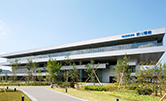
Specifically, since one of Yaskawa’s DNA (corporate culture) is “technology-driven,” we believe that the development of human resources in science and engineering is directly related to our business, and we are focusing on the development of human resources who will take a role in the evolution of manufacturing. In addition, by conducting the above activities in Robot Village (our headquarters and Yahatanishi Plant in Kitakyushu city) as our core base, we aim to coexist and co-create with the local community.
In addition, Yaskawa has established its policy in social relations in the Yaskawa Group Code of Conduct as follows and is actively promoting its business activities and social contributions.
Based on this guidance, we will promote our business activities with an awareness of contributing to society, including local communities. Donations are made through a transparent approval process that includes checking for potential anti-social forces.
We have also established the following social contribution policies, and are working to build good relationships and create value through dialogue and collaboration with stakeholders.
With “a company founded on technology” as our motto, we will work to develop human resources who will play a role in “evolution of manufacturing” as a global company, and promote social contribution activities to coexist and co-create with local communities.
We will stimulate interest in science and technology and contribute to the cultivation of people who will play a role in future manufacturing.
We will contribute to the development of human resources and regional revitalization by supporting academic and educational activities, and through the promotion of sports, culture and the arts, especially in regions where Yaskawa has plants and business bases.
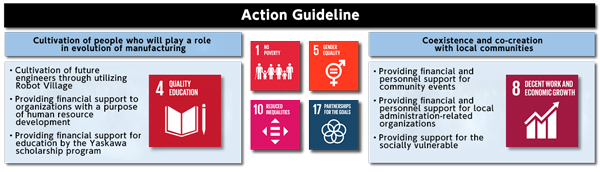
Centered on the above-mentioned community contribution policy, Yaskawa provides support to various fields and organizations (For example, incorporated associations, foundations, NPOs and NGOs).
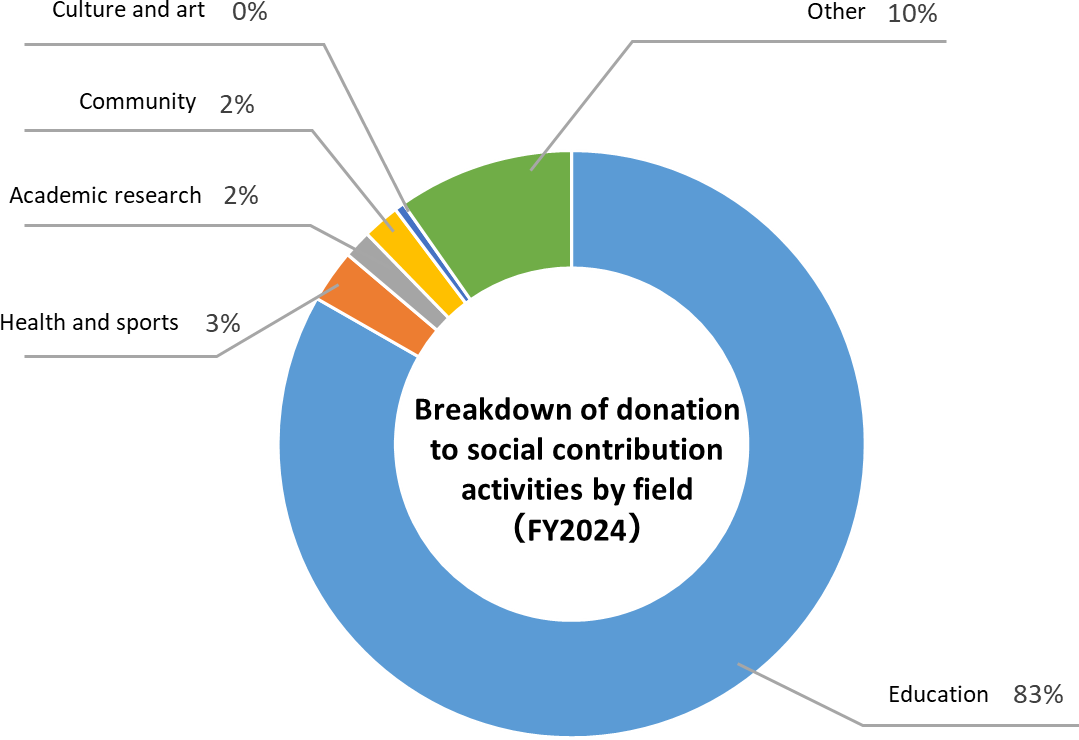
We have established the Social Contribution and Diversity Promotion Dept. within the General Affairs Div., and are making efforts to contribute to society. We will promote activities that make local residents happy to have Yaskawa in the community and that make employees happy to work for Yaskawa.
Also, we established the “YASKAWA Mirai Club” in 2005 as a mechanism for our employees to participate in social contribution activities. Employees of Yaskawa and Yaskawa Group companies, who voluntarily joined the YASKAWA Mirai Club in support of its objectives, continue to contribute part of their salaries, and use the funds raised to make various social contribution activities and donations.
The status of these activities is reported on a social contribution page on the company intranet.
| Materiality | Create a rewarding workplace and human resource development |
|---|---|
| Desired outcomes | Promote social contribution activities to coexist and co-create with local communities as well as to develop human resources for the evolution of manufacturing |
| Initiatives[Targets] |
|
| FY2024 results | • Started a new program of “Robot Handmaking Event” (held 2 sessions) |
We provide various support and activities to young people in order to develop engineers who will lead the future.
Using the Robot Village (Yaskawa Innovation Center, Yaskawa History Museum, Robot Factory, Greenbelt) as well as each factory and robot center, visitors will be able to come into contact with technologies and products centered on “motors and their applications” that Yaskawa has cultivated over 100 years. The initiatives are intended to encourage interest in science and technology that is continuing to evolve on a daily basis, and will contribute to the development of human resources who will be responsible for next-generation manufacturing.
We sponsored programs for children at museums and science museums in Kitakyushu City, where our head office is located, and held a handmade motor class at the YASKAWA Innovation Center. The participants learned the basics of the operating principles of the motor, which is the source of Yaskawa’s core technology, and experienced the joy and depth of manufacturing through repeated trial and error.
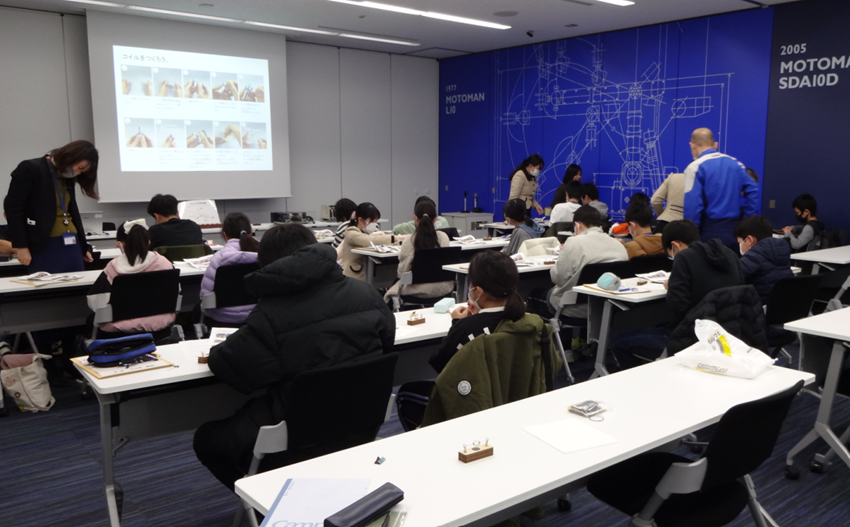
Since 2015, we have held an event called “Yaskawa Electric Girl’s Day” *1 regularly for junior high school girls in Kitakyushu City, where our head office is located, to introduce them to workplaces in the field of science and manufacturing. From fiscal 2024, we introduced a handmade robot kit, newly planned and produced by our company, in which a model robot is assembled and programmed to operate. Yaskawa employees acted as lecturers and gave participants the opportunity to experience the joy of manufacturing. In addition, participants interacted with Yaskawa engineers through job introductions and round-table discussions so that they could have an image of getting engaged in what they like and care about as a job, regardless of gender.
*1:“Girl’s Day” is an open event started by the German government in 2001 for companies, universities, research centers, and other organizations to invite female students from elementary schools, junior high schools, and high schools to promote female participation in the engineering career.
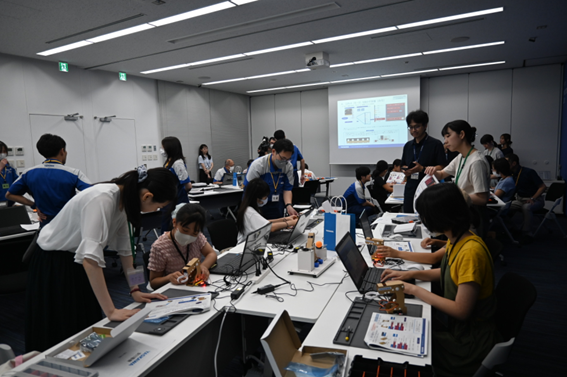
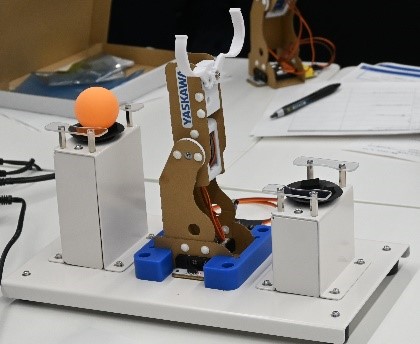
A handmade robot kit
We participate in “The Consortium of Human Education for Future Robot System Integration (CHERSI)” which was organized under the leadership of the Ministry of Economy, Trade and Industry to promote the development of future robotics-related human resources. The support targets of CHERSI are technical colleges, technical high schools, and the Japan Organization for Employment of the Elderly, Persons with Disabilities and Job Seekers. By participating in CHERSI, we will contribute to the development of a wide range of human resources for the advanced industrial robot market.
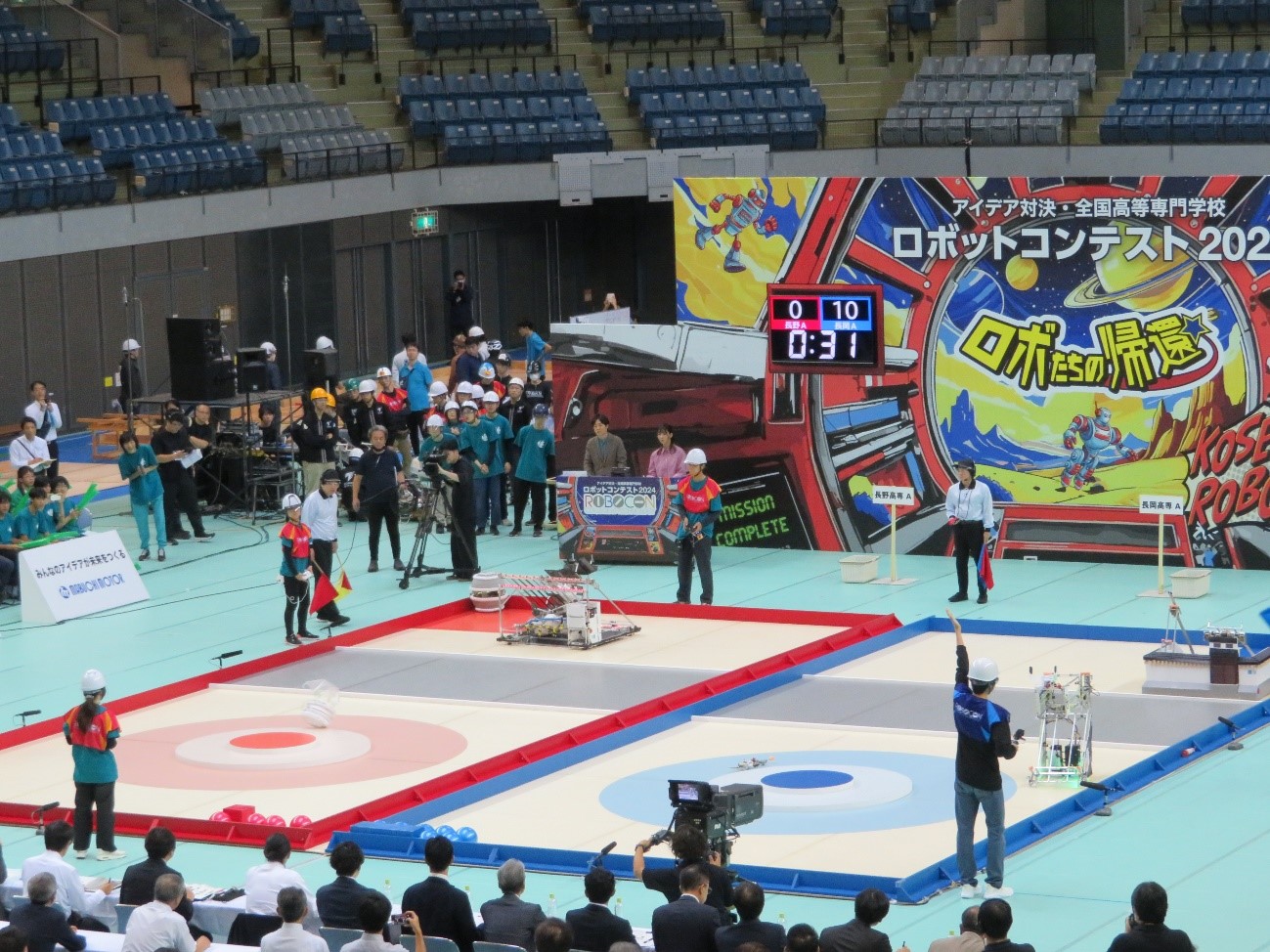
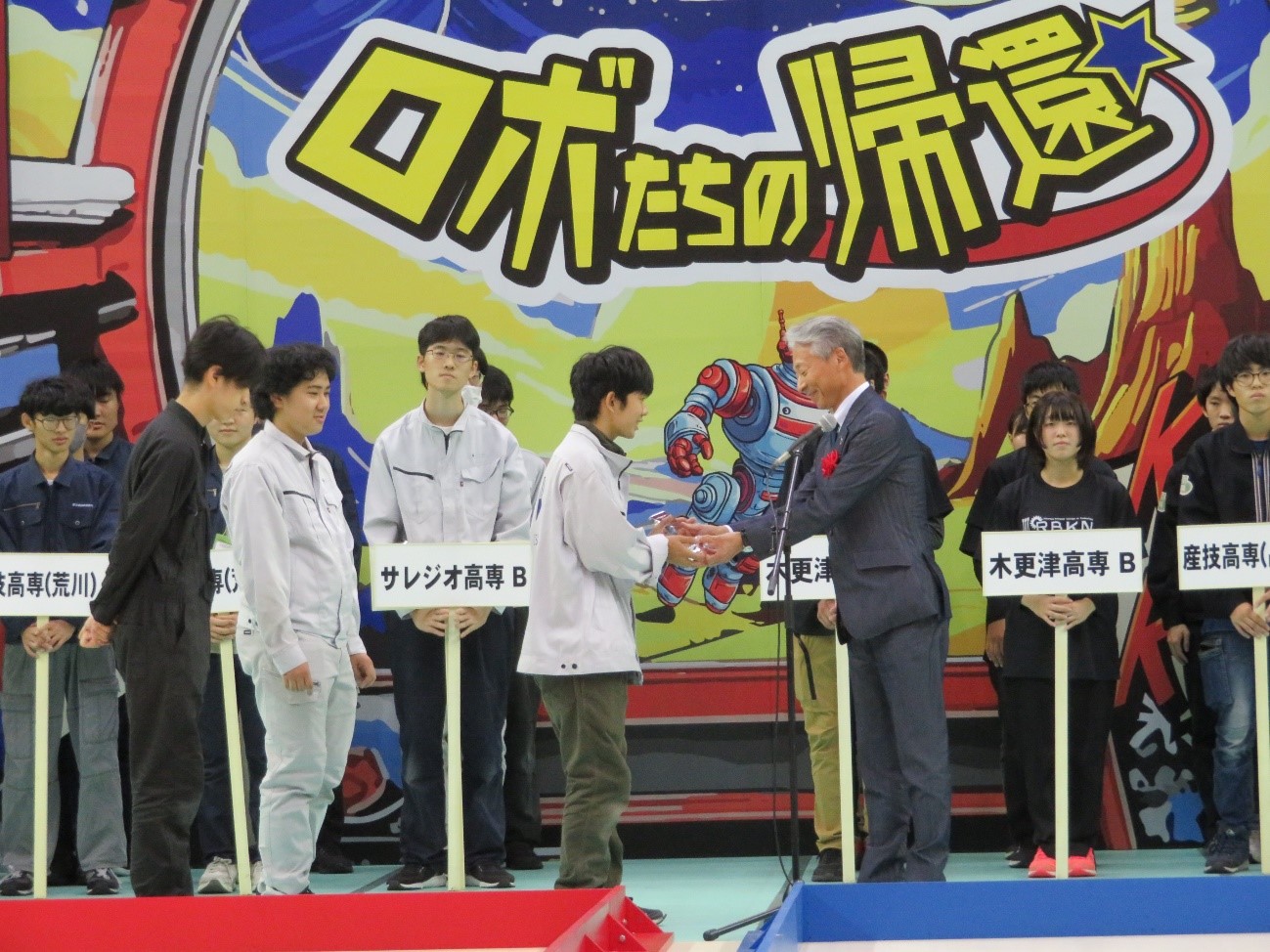
Since 2005, Yaskawa Electric has co-sponsored the annual Technical College Students’ Robot Contest, popularly known as the Kosen Robo-Con, which is held since 1988. In this event, engineers-to-be from around Japan compete focusing on robot production ideas and technology as well as robot performance.
As a company in the robotics business, we support this educational opportunity in order to encourage many young students to get involved in manufacturing and in hopes of fostering the next generation of talent.
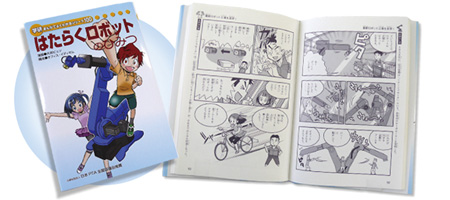
As a part of the project for the 100th anniversary of the company’s establishment, Yaskawa published a comic book, “Hataraku Robot no Himitsu (The Secret of Robots in Manufacturing),” as one of the series of educational materials for primary school children “Manga de Yokuwakaru Series (Let’s Learn It with Comic),” planned and produced by Gakken Publishing Co., Ltd. (hereinafter “Gakken”) and donated the comic books to 22,000 primary schools and 3,200 public libraries in Japan through Gakken.
The series are Gakken’s educational materials, which introduce various themes in order for children to understand them easily, that have been popular among children for more than 20 years as recommended books by “The Public-Interest Corporation of Japan PTA (Parents and Teachers Association) National Council.” Assenting to its intent and purpose, Yaskawa supported this publication to foster children’s interest in manufacturing and expand their possibility for the future through industrial robots, one of its major products.
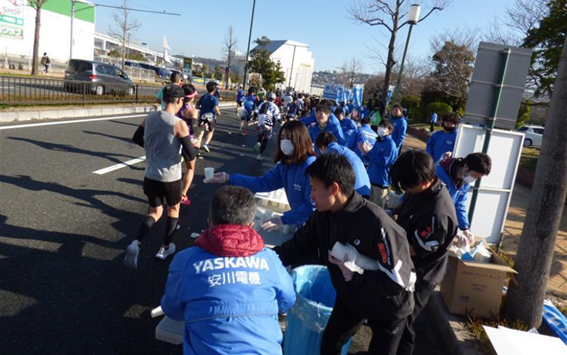
At our global locations with production and business sites, as well as in the city of Kitakyushu, where Yaskawa is headquartered, we will actively participate in local events, promote sports, and provide a venue for dialogue with domestic and overseas guests and industry-academia-government communications, in an effort to contribute to society and promote co-creation with the local community.
Since the first event, Yaskawa has been a main sponsor of this large-scale, citizen-participatory marathon held in Kitakyushu City, where our head office is located. In February 2025, many Yaskawa Group employees and their families volunteered at the Aid Station. We were able to contribute to the excitement of the event by sending smiles and applause to the runners.
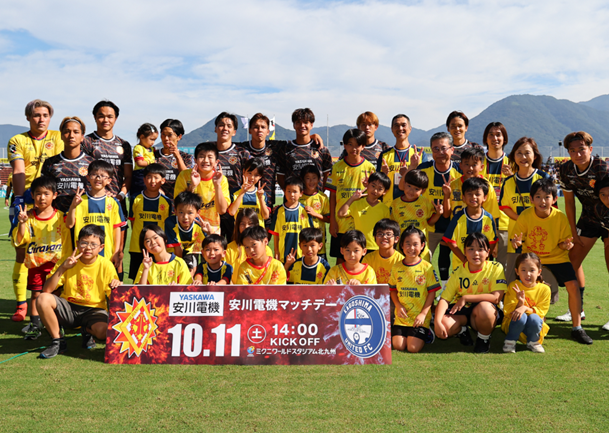
“Giravanz Kitakyushu” is a professional soccer club that belongs to the Japan Professional Football League (J. League), and is headquartered in Kitakyushu City. In 1947, Giravanz’s predecessor, Mitsubishi Kasei Kurosaki Soccer Club was founded. In 2010, the club became the 5th J-League member in the Kyushu region after Roasso Kumamoto and the 2nd J-League member in Fukuoka Prefecture after Avispa Fukuoka. Yaskawa is an official sponsor of Giravanz Kitakyushu.
Yaskawa has been producing calendars displaying the works of Master Munakata since 1958. These calendars were sent out to customers at home and abroad, and they have always been extremely popular. Although countless calendars are produced in Japan today, not one of them has been dedicated continually to the works of one artist for so long.

Nishi Kaido Munakata Woodblock Prints Hirato Yobiko no Saku
The Yaskawa calendars are distinguished by extraordinary works of art derived from poetry penned by the Master himself. Another striking feature is that the true beauty and natural talent found in the original works were painstakingly reproduced by printing every stunning piece on handmade Japanese paper. Each piece can be removed from the original mounting, remounted and framed for years of enjoyment long after the calendar year has gone.
Many brilliant pieces have appeared in the Yaskawa calendars over the years, but the most notable calendars have to be the Kaido Series that began with the Nishi Kaido Munakata Woodblock Prints from 1971. These truly original collections were the result of close collaboration between Master Munakata and Yaskawa both in the planning and in the journey to gather the materials that were used. No one was more enthusiastic about making the calendars truly great works of art than Master Munakata himself. He wanted others to draw from life, to enjoy beautiful scenery, and to experience the delicacies of provintial areas. The calendars make it clear that he wanted others to enjoy the journey as well.
An Encounter between Yaskawa and Master Shiko Munakata

The Master at work
It began in 1951 when the head of advertising’s strong interest in prints created by Master Munakata culminated in a visit to the Master’s studio in Ogikubo. That first encounter became a lifelong relationship as Yaskawa commissioned one Munakata piece after another to grace our facilities as well as our promotional magazines. Some of the Master’s extraordinary pieces eventually evolved into a series of calendars.
Master Munakata was not a leading woodblock print artist in 1951, and, in fact, he was virtually unknown. However, he exhibited his piece “Nyonin Kanzeon” at the International Exhibition in Lugano, Switzerland that same year, and became the first Japanese artist ever to win the coveted top prize there. His print “Shaka Judaideshi” won the Grand Prix at the Sao Paolo International Art Exhibition in 1955, and a series of subsequent wins brought Master Munakata international acclaim. This was soon followed by widespread recognition in Japan as well.International fame never affected our relationship with the Master, and we are honored that he played such an invaluable role in our corporate history and culture over the years.
Since Yaskawa opened Robot Village at its head office in Kitakyushu on June 1, 2015 as part of its 100th anniversary project, the YASKAWA Innovation Center, an integral facility at the village, has welcomed more than 200,000 visitors as of June 2025. Embracing our hopes to nurture children who are our future and to express our appreciation to the people of the community who have supported us since our establishment, our guides and every one of our staff members aim to deliver the appeals of Yaskawa to the visitors to deepen their understanding for our company.
We will continue to use Robot Village as a contact point that ties Yaskawa with the community by continuing to vigorously take part in local events, offer inspection tours to customers from both Japan and abroad, and as an avenue for communication between industry, government, and academia for our group to co-exist with the community.
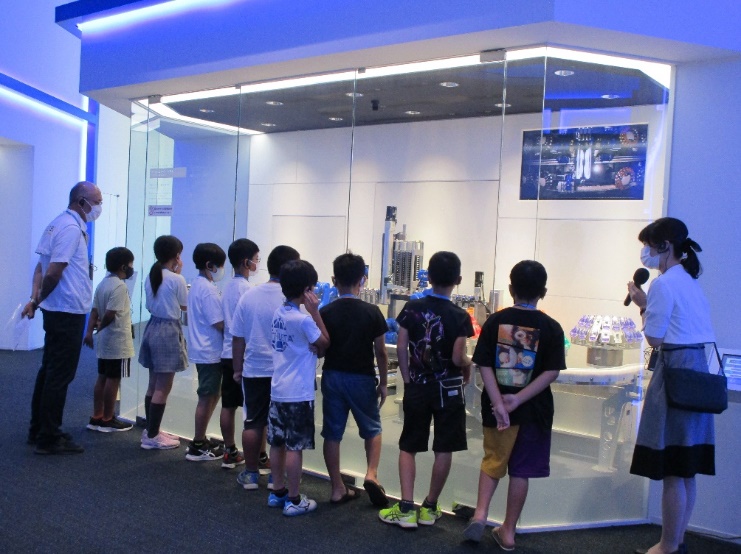
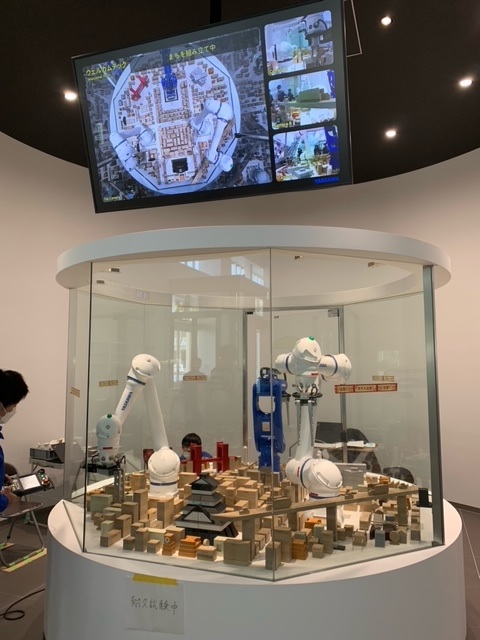
The Space LABO, a science museum in Kitakyushu, features a section devoted to Yaskawa exhibits. Here, three Yaskawa robots work together to assemble Kokura Castle, Wakatoohashi Bridge, JR Mojiko Station, and other famous sites in the city, as well as YASKAWA Innovation Center, using building blocks to create a town.
The former residence of Keiichiro Yasukawa, the promotor of Yaskawa, opened to the public on April 1, 2022. Since 2016, Yaskawa has worked with the city government on a project to utilize the former Yasukawa residence, which was designated a tangible cultural property of the city in 2018 and is now being used as a tourist attraction for visitors from outside the city.
Yaskawa established the IMPACT Corporate Giving Program (IMPACT) to support donations and volunteer activities through company-sponsored programs and initiatives. IMPACT supports local communities through a variety of activities, including participation in a charity event to support people with multiple sclerosis as well as collecting toys for children who do not have presents at Christmas through the local foster care system.


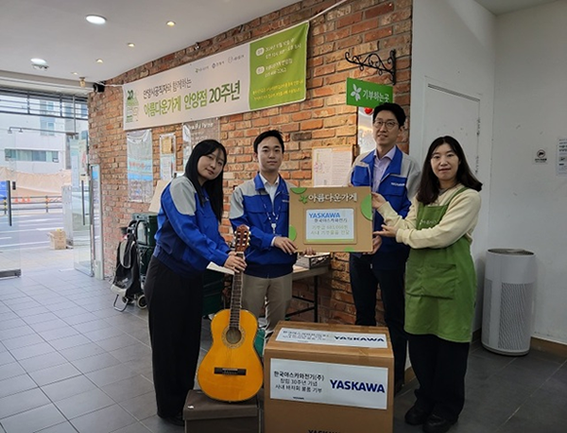
In addition to supporting Japan-Korea exchange programs and providing financial support to local children and students, Yaskawa Electric Korea provides volunteer activities for local communities. In 2024, to commemorate the company’s 30th anniversary, it held an in‑house bazaar featuring cookies and other goods purchased from a vocational rehabilitation facility for people with disabilities. The proceeds from the bazaar, together with additional donations, were then contributed to the facility.
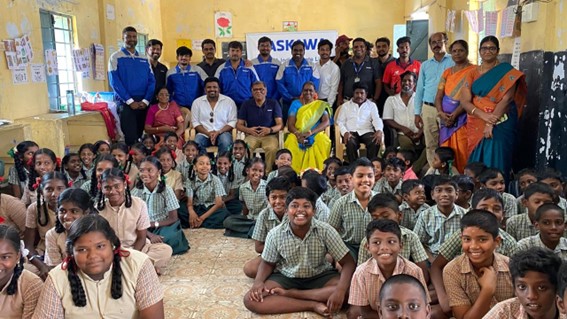
Yaskawa India supports public schools and educational institutions mainly in rural and semi‑urban areas. These efforts aim to reduce educational disparities, improve digital learning environments, upgrade sanitation and infrastructure, support girls’ education, and create inclusive and sustainable learning environments.
Yaskawa Europe carries out several employee‑driven social contribution activities, focusing on environmental stewardship and strengthening ties with local communities.
・Environmental initiatives such as waste collection, installing compost systems, and mobility‑challenge activities
・Providing workplace experience opportunities for people with disabilities
・Volunteering at local hospices and baby banks



Copyright © 2003‐2026 YASKAWA ELECTRIC CORPORATION.